
Buying Your First Home
in Scotland
Buying your first home in Scotland can feel simple from the outside and messy once you are in it. Portals make it look like the hard part is finding a place you like. In reality, the hard part is knowing what is worth pursuing, what the Home Report is really telling you, what level of offer is sensible, and when you are close to becoming legally committed.
This guide is designed for the Scottish market.
This guide is written for people buying in the real Scottish market, not for people reading generic UK advice that mostly relates to England. The process is different. The risks are different. The mistakes are different as well. If you get the sequence right, keep your paperwork tight and understand the numbers before you fall in love with the property, the process becomes far more manageable.
completion time
selling in Scotland
properties
A Guide for First-Time Buyers in Scotland
This guide is for first-time buyers buying a flat or house in Scotland, whether you are buying on your own, as a couple, moving back from overseas, or trying to get out of renting.
It is especially useful if you are looking in Glasgow and the Central Belt where competition, condition and pricing can vary sharply by area and stock type.
Preparation is not optional - it is how you win.
In Scotland, you need your solicitor instructed and your mortgage agreed before you make an offer - not after. Properties move quickly, offers are often sealed, and once missives conclude you are legally committed.
Understanding this before you start viewing puts you ahead of most first time buyers in the market.
Five steps to get
right from the start.
The Scottish buying process is different from the rest of the UK in several important ways. Understanding these differences before you start viewing is what separates buyers who secure properties from those who keep missing out.
Before you spend weekends chasing viewings, get your buying position clear. Know your budget range, not just your upper limit. The purchase price is only part of the cost. You also need to allow for solicitor fees, mortgage fees where relevant, moving costs, immediate repairs, furniture, flooring and any initial works the Home Report is hinting at. If your deposit is tight, protect cash for after completion rather than throwing every pound into the offer. A property with a tired kitchen, old windows or a Category 2 roof issue can drain cash quickly after you move in. At this stage you should have a mortgage agreement in principle, proof of deposit and a solicitor ready to note interest when needed.
In Scotland, most residential properties are marketed with a Home Report. That gives you a surveyor valuation, condition ratings, an energy report and a property questionnaire before you offer. That is useful, but it is not a guarantee that the property is problem-free. Many buyers make one of two mistakes. They either ignore the report and get carried away, or they panic at every issue without understanding what is normal for the property type. The key is to separate cosmetic works from risk. Dated decor is one thing. Active damp, roof movement, timber decay, poor electrics, outdated heating or missing paperwork are something else. On tenements and older stock, also look closely at shared responsibility issues such as roofs, stonework, gutters and closes.
A property can be good and still be wrong for you. That is where buyers often get caught. Think about resale demand as well as your own taste. Ask whether the layout works, whether the building is likely to cause recurring cost, what the factor arrangement is, whether parking matters for the area, and whether you are paying a premium for finish that may not hold. If the property needs work, ask what that work would cost in the first year, not in theory. New flooring, decoration, windows, rewiring, heating upgrades and kitchens can add up quickly.
If you want to pursue a property, your solicitor can note interest. That does not commit you to buy, but it tells the selling side that there is active interest. Where multiple parties are interested, the selling agent may set a closing date. That means written offers are submitted without buyers seeing each other’s numbers. This is where first-time buyers often overpay. Do not decide your number based on emotion, pressure or what you think you have to do to win. Decide your number based on the property, the Home Report, local evidence and what the property is worth to you after any immediate works and costs.
The legal commitment in Scotland comes earlier than many buyers realise. Once missives are concluded, the deal is legally binding. That matters because some buyers assume they can keep negotiating late in the process or walk away casually if they change their mind. That is not how you should think about a Scottish purchase. Get advice, review the report, review the numbers and only move forward when you are comfortable with the risk.
The Costs Buyers
Commonly Miss.
The main trap is to focus on the deposit and ignore the rest. Commonly missed costs include solicitor fees, mortgage product fees, removals, flooring, white goods, immediate repairs, factor float, buildings and contents insurance, and any work needed to make the property mortgageable or liveable. Where LBTT applies, budget that early. Even where it does not, do not treat the absence of LBTT as spare cash to overbid with. Keep contingency.
Typically 5 to 10 percent of the purchase price depending on your lender. This is the single largest upfront cost and must be in your account before completion.
Scotland's equivalent of stamp duty. First time buyers benefit from a raised threshold of £175,000. Note that an 8% Additional Dwelling Supplement (ADS) applies if you already own a property.
Calculate your LBTTYour solicitor handles the legal transfer of ownership, title checks, and the missives process. Fees vary by solicitor and transaction complexity. Where possible, I contribute towards these costs for buyers purchasing my properties.
Often overlooked until the last minute. Removal companies, storage, utility transfers and any immediate works to your new home should all be factored in before you commit.
Get clarity
before you start viewing.
If you are unsure what you can afford, how to approach your first purchase, or what the process looks like in practice - the worst thing you can do is start viewing properties without that foundation in place.
A short conversation costs nothing and gives you a clear picture of where you stand, what you can realistically afford, and what to focus on. Start there before anything else.
Speak to Me About Your PositionThe difference is
preparation, not luck.
These are the mistakes I see repeatedly from buyers who missed out on good properties, paid over the odds, or got caught out by costs they hadn't planned for. All of them are avoidable.
"The difference between getting a property and missing out is preparation, not luck."
Before you offer,
can you answer these?
Before offering, make sure you can answer these questions clearly. If any of them give you pause, that is worth resolving before you commit — not after. Getting clear on these is what separates a confident offer from a hopeful one.
Do I understand the Home Report and any red flags?
Do I know the likely first-year spend after purchase?
Do I know what similar properties have actually sold for?
Am I comfortable with the building and location, not just the kitchen and bathroom?
If I win this property, will I still have enough cash to deal with what comes next?
Buying made
straightforward.
I am a property developer who buys, renovates and sells homes across Glasgow and the Central Belt. When you buy from me, the process is designed to be simple, transparent, and faster than a standard purchase.
Every property I sell has been fully refurbished to a consistent standard. No hidden work, no surprises after you move in. What you see is what you get.
I deal directly. No multiple layers of agents or unclear timelines. You know exactly where things stand at every stage of the purchase.
Where possible, I contribute towards legal costs for buyers purchasing my properties. This reduces the upfront cash you need and removes one of the common barriers for first time buyers.
Buyers who are mortgage-ready and have a solicitor instructed move to the front. Having these in place before you view means you can act the same day if the right property comes up.
I can connect you with the solicitors and mortgage brokers I use myself. They know how I work and how to move quickly - which means your purchase moves faster than going in cold with unknown advisers.
I want buyers who are serious and organised. If you bring that, I'll do everything on my end to make the process as smooth and straightforward as possible.
Not theory.
Real deals, real experience.
I'm not a property educator who has never completed a deal. Everything on this page comes from 25+ years of buying, refurbishing and selling property across Glasgow and the Central Belt.
I'm not advising from the sidelines. I have active projects running and properties regularly available for purchase.
A significant portion of my sales go to first time buyers. I understand what they need, what concerns they have, and how to make the process work for them.
Discussing the Scottish property market for first time buyers - not as a commentator, but as someone actively working in it every week.
A recent Glasgow project -
bought by a first time buyer.
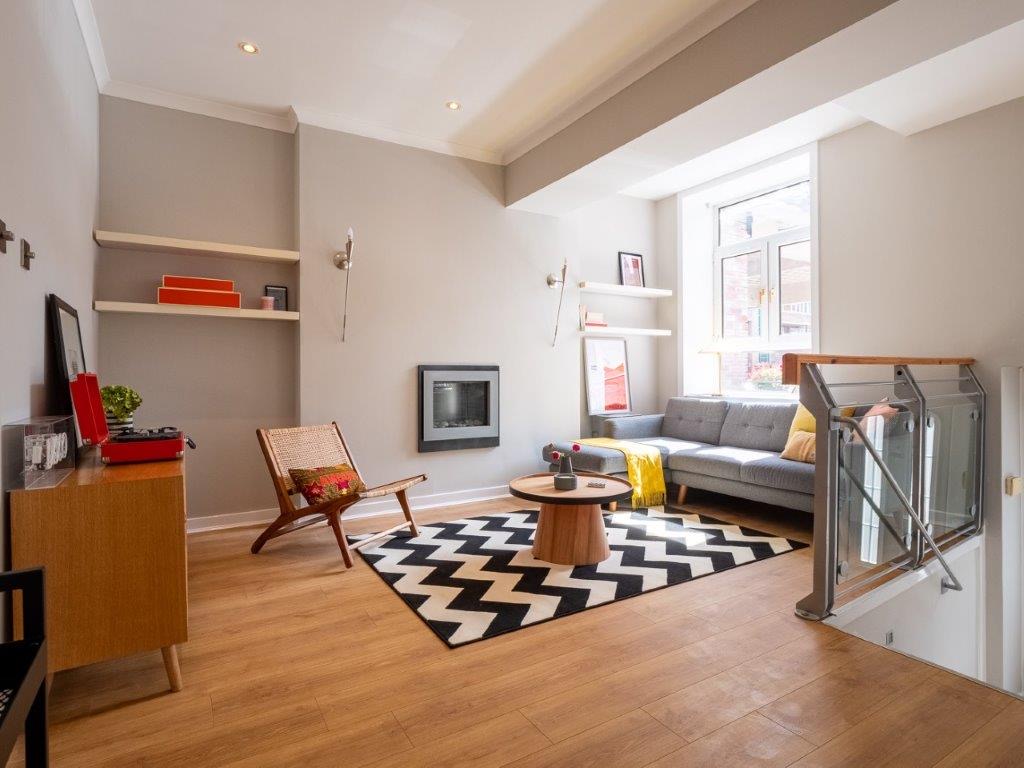
Purchased in average condition.
Fully refurbished. Sold to a first time buyer.
A recent Glasgow project was purchased in average condition and fully refurbished to a high specification. The result was strong demand from first time buyers from day one of listing.
This is what a well-executed refurbishment looks like in a good Glasgow location. First time buyers want move-in ready - that is exactly what I deliver.
View All ProjectsBook a Buyer
Strategy Session.
If you are actively looking or planning to buy in the next few months, the best thing you can do is start the conversation now. Book a buyer strategy session or send over the Home Report for a second opinion before you offer.
This is practical property guidance only. It does not replace advice from a solicitor, mortgage broker, accountant, surveyor or regulated financial adviser.
Questions I get asked
every week.
Yes. Typically 5 to 10 percent of the purchase price depending on your lender. A larger deposit usually means access to better mortgage rates and increases your credibility as a buyer in a competitive market. Make sure this money is in a readily accessible account before you start viewing.
A Home Report is a mandatory seller-provided document in Scotland that includes a Single Survey (valuation and condition), an Energy Performance Certificate, and a Property Questionnaire. The key figure is the surveyor's valuation. As a buyer, you can request a copy for free before making an offer. Understanding the relationship between this valuation and the likely sale price is critical.
Often yes - particularly in high-demand areas of Glasgow and Edinburgh. In competitive situations, properties regularly sell 5 to 15 percent above the Home Report value. Your offer strategy should account for this from the start, which is why having an Agreement in Principle that covers this headroom is important.
Yes. All offers must be submitted through a solicitor in Scotland. Unlike England, you cannot submit a private offer directly. This means instructing your solicitor before you find a property, not after. Having one ready means you can act the same day when the right property comes up.
Typically 6 to 8 weeks from offer acceptance to completion - though this can be shorter with the right team in place. When you buy through me, I connect you with solicitors and a mortgage broker who understand my process and properties, which keeps things moving efficiently.
LBTT (Land and Buildings Transaction Tax) is Scotland's equivalent of stamp duty. First time buyers benefit from a raised nil-rate threshold of £175,000. For most first time purchases in Stewart's typical price range, this means zero LBTT is payable. Your solicitor will calculate the exact liability for your specific purchase.
'Offers over' means the advertised price is a minimum starting point - not a fixed asking price. Buyers submit sealed offers, usually above the Home Report valuation, and the highest credible offer wins. You do not know what others are bidding. This is why preparation, pre-approved finance, and the right offer strategy matter so much.